
The essentials in 30 seconds
An AI agent is a program that receives an objective, breaks it down into steps, executes those steps by calling tools, and loops until it gets a result. That's the difference from a classic chat assistant: you're not asking it for an answer, you're asking it for a result, and it acts to get it.
- "Agent GPT" isn't a single product. The term refers either to AgentGPT, a specific web tool, or more broadly to any autonomous agent built on a GPT model.
- The common principle: objective, planning, execution with tools, verification loop. It's an architecture, not a brand.
- In 2026, the serious generalist agents are Manus, Genspark, and Devin for code. Frameworks for building your own are CrewAI, LangGraph, and AutoGPT.
- The real limit isn't the model's intelligence — it's the reliability of the loop: an agent that makes a mistake at step 3 propagates the error all the way to step 10.
Bottom line: an AI agent executes tasks autonomously. It's powerful for repetitive, well-defined tasks, and still fragile the moment a task is ambiguous or critical.
"Agent GPT": clearing up the ambiguity
When someone types "agent GPT," they have one of three things in mind — and confusing them leads to wrong expectations.
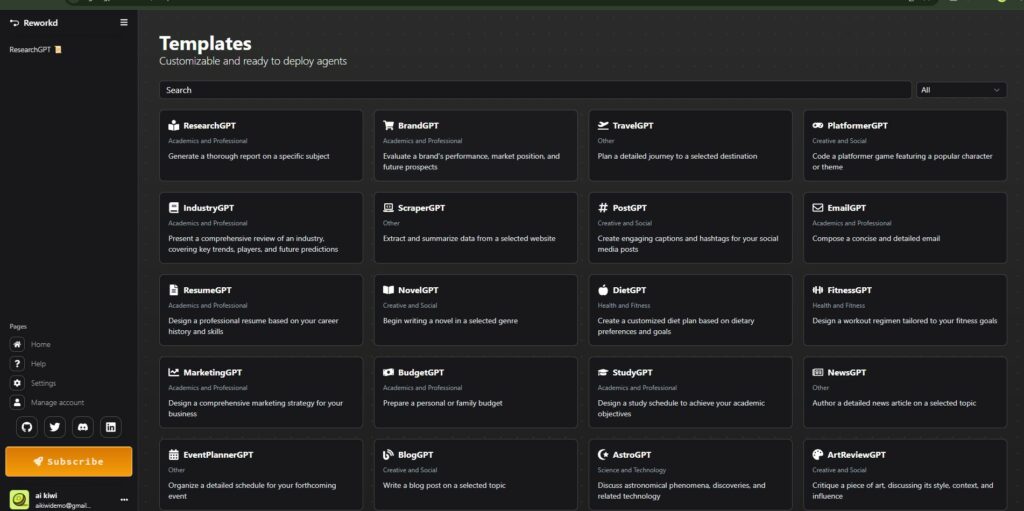
AgentGPT, the tool. It's a web app that popularized the idea in 2023: you give it an objective, the tool generates its own task list, executes them one by one, and displays the progress. Useful for understanding the concept, limited for production use.
OpenAI's GPTs. These are customized versions of ChatGPT, configured with instructions and sometimes tools. A GPT isn't really an autonomous agent: it remains a tooled conversation assistant. It responds — it doesn't execute a long chain of tasks on its own.
The autonomous agent in the broad sense. Any system that takes an objective and loops until it gets a result, whether it runs on a GPT model, Claude, Gemini, or an open model. This is the most useful meaning today, and it's the one we'll dig into here.
How an autonomous agent works, without the jargon
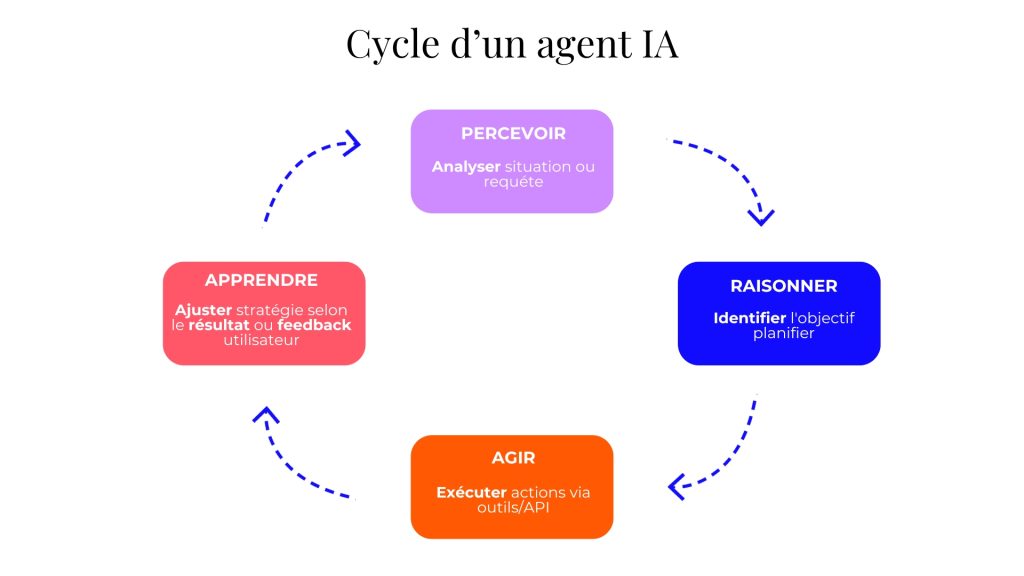
Four building blocks make up pretty much every agent.
The objective. You provide a goal in natural language: "find the ten competitors of this company and summarize their positioning." The agent doesn't receive step-by-step instructions — just the destination.
The planning. The model breaks the objective down into subtasks. This is the step that distinguishes an agent from a simple model call: it writes its own plan before acting.
Execution with tools. For each subtask, the agent calls a tool: a web search, a browser, a code interpreter, an API. Without tools, an agent just talks. With them, it acts on the real world. That's also why the MCP protocol matters so much: it standardizes how those tools get plugged in.
The loop. The agent observes the result of each step, judges whether it's moving forward, adjusts its plan, and starts again. It stops when the objective is reached, or when it's exhausted its budget of attempts.
Everything depends on the quality of this loop. A brilliant model in a bad agent framework spins its wheels. A decent model in a well-designed loop, with reliable tools and clear stopping points, gets real work done.
AI agent landscape in 2026
The market has sorted itself out. Here are the families that matter.
| Tool | Type | For whom | Entry price |
|---|---|---|---|
| Manus | Generalist agent | Varied tasks, research, production | $18/month |
| Genspark | Multi-tool super-agent | Research and tooled tasks | $23/month |
| Devin | Autonomous code agent | Developers, engineering tasks | $18/month |
| AgentGPT | Educational web agent | Discovering the concept | Freemium |
| CrewAI | Agent framework | Building your own agents | Free, open source |
| LangGraph | Stateful agent framework | Developers, reliable agents | Free, open source |
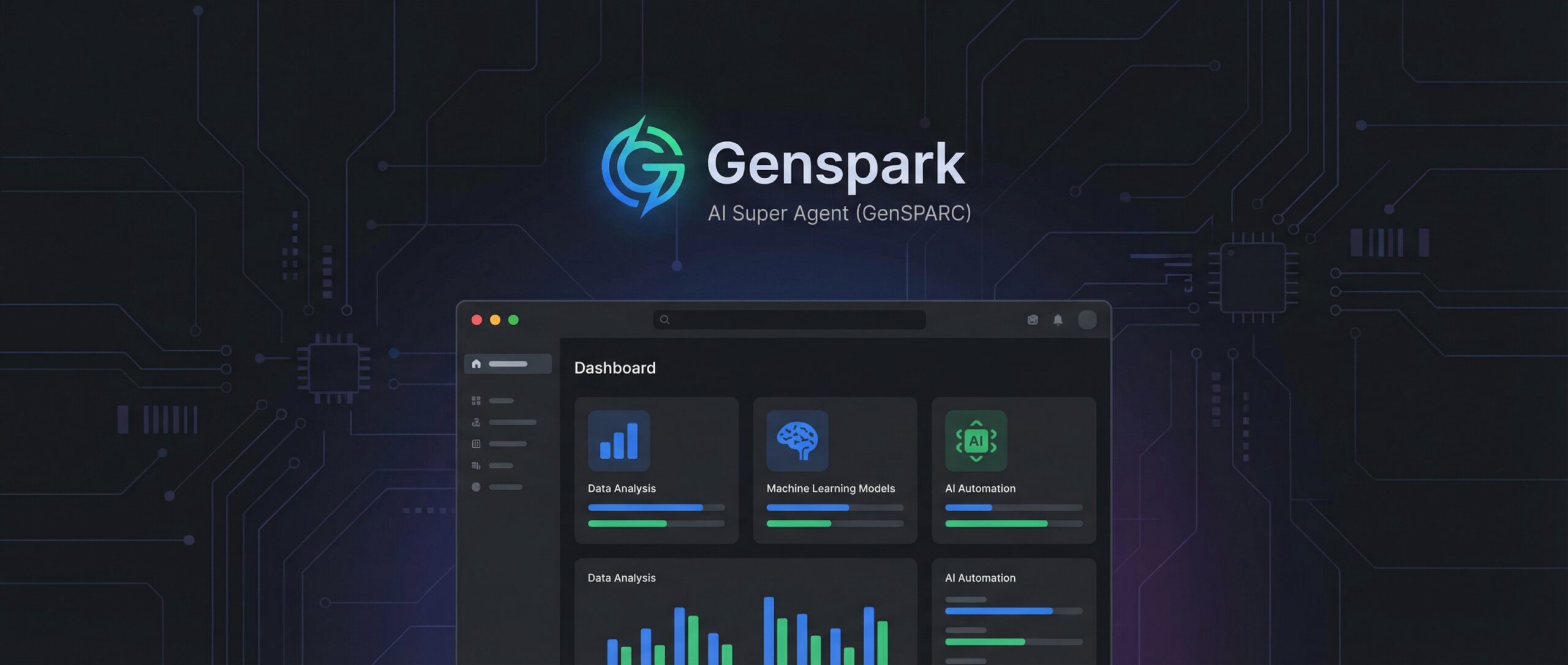
Generalist agents. Manus and Genspark target everyday users: you describe a task, they handle it end to end, research included. It's the most visible promise, and the most uneven: excellent on well-defined tasks, sometimes disappointing when things are ambiguous.

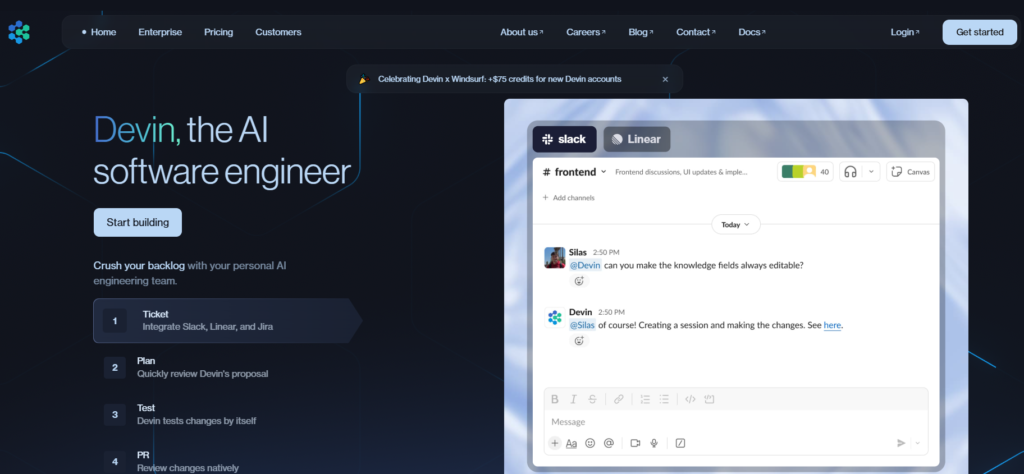
Code agents. Devin positions itself as an autonomous software engineer. On a well-described task — a migration or an isolated bug fix — it delivers. On a complex feature, it still needs close supervision. For day-to-day code, an editor like those in our AI coding tools comparison is often more predictable.
Frameworks. CrewAI, LangGraph, and AutoGPT aren't finished products: they're toolkits for building your own agents. We cover them in our guide on BabyAGI and agent frameworks.
For the full picture, the AI Agents category lists all referenced tools.
What an agent can actually do today
Let's be concrete, no hype.
It does well. Repetitive, well-defined tasks: filling in a monitoring spreadsheet, comparing product pages, extracting data from multiple pages, running identical web actions in sequence. Everything boring, mechanical, and verifiable.
It does okay. Tasks that require contextual judgment: writing a document that needs to sound right for a specific audience, prioritizing between options without explicit criteria. The agent produces something, but you go back over it.
It does badly. Anything critical and irreversible without validation: sending emails to clients, modifying a production database, making a financial decision. Not because it's technically incapable, but because its error rate — even low — is unacceptable without a human in the loop.
The practical rule: hand off to an agent what you could verify quickly, and what failure won't cost you much.
The limits, because there are some
Compounding error. This is the core flaw. An agent that makes a mistake mid-process doesn't always know it, and builds everything after on a false foundation. The longer the chain, the more risk accumulates.
Cost. An agent that loops calls the model dozens of times for a single task. The bill climbs fast, especially on top-tier models. A task that looks like it costs a dollar can end up costing five.
Security. An agent with access to your browser, your email, or your file system effectively has your permissions. A poorly scoped agent — or one manipulated by poisoned content it reads along the way — can act against you. Never give an agent more access than necessary.
Verifiability. A good agent shows its reasoning and its actions, step by step, so you can check. An agent that just hands you a final result with no trace is a gamble. Favor the ones that expose their process.
Should you start now
Yes, but with the right mindset. AI agents aren't a gimmick: for a freelancer or a small team, automating a recurring monitoring or research task is a real time saver, right now. Start small, on a low-stakes task, and watch the process closely the first few times.
What you shouldn't do is hand off a critical process to an agent and hope it "figures it out." Full autonomy without supervision isn't here in 2026. The right approach is the agent that prepares, proposes, and executes the mechanical stuff — while you keep the decision-making and the sign-off.
That's the editorial line we hold at Joute: outsource the execution, keep the understanding. An agent saves you time if you can judge what it produces. It puts you at risk if you sign off blind.
Verdict
"Agent GPT" covers a real shift, not a trend: we're moving from AI that answers to AI that acts. The technology is usable right now for repetitive, well-defined, and verifiable tasks — and that's already a lot.
The caution lands on three points: errors propagating down the chain, the cost of loops, and access security. A well-chosen agent, launched on the right task, with a human keeping control over decisions, is an excellent lever. Launched on autopilot for something sensitive, it's a bad idea. Pick the tool for the task, not the other way around.
Frequently asked questions
What exactly is an Agent GPT?
An Agent GPT is a system that receives an objective, breaks it down into subtasks, executes them by calling tools, then loops until it gets a result. "Agent GPT" can refer specifically to the AgentGPT tool, or more broadly to any autonomous agent built on a GPT model.
What's the difference between an AI agent and ChatGPT?
ChatGPT responds to messages: you ask it for an answer. An AI agent executes tasks: you give it an objective and it acts, step by step, using tools, until it delivers a result. The agent does — the assistant responds.
What's the best AI agent in 2026?
There's no single answer. For generalist tasks, Manus and Genspark are the mainstream references. For code, Devin aims for autonomy. For building your own agents, CrewAI and LangGraph are the most solid frameworks. The right choice depends on your task.
Are AI agents reliable?
Partially. They're reliable on repetitive, well-defined tasks — much less so on ambiguous or critical ones. The main risk is compounding error: a mistake mid-process throws off everything that follows. A human must validate anything important or irreversible.
Is an AI agent dangerous for my data?
It can be. An agent that accesses your browser, email, or files has your permissions. Always limit its access to the strict minimum, and prefer agents that show their process so you can check what they're doing.
Keep reading
BabyAGI and open source agent frameworks: the clear guide
BabyAGI explained simply: what this project brought to the table, how it works, and which open source agent frameworks have replaced it in 2026.
Best MCP Servers in 2026: Joute's picks for connecting Claude, Cursor, and the rest
Top useful MCP servers in 2026: filesystem, GitHub, browser, database. Which ones to install first on Claude Desktop, and which ones to skip.
MCP vs API: why the protocol changes everything for connecting an AI
MCP or REST API for getting an AI to work with your tools? We compare both approaches: dev effort, security, longevity, and when each one is worth it.