
The essentials in 30 seconds
BabyAGI is an open source project that appeared in 2023, famous for showing in just a few lines of code how a language model can manage its own task list: create tasks, execute them, generate new ones, in a loop. It's not a consumer product — it's an architectural demo that spawned an entire ecosystem.
- BabyAGI fits in very little code. Its strength isn't sophistication, it's clarity: it makes the loop at the heart of every agent visible.
- The concept: a task queue, a model that executes the top task, then a model that creates the next tasks based on the result and the objective.
- In 2026, nobody builds a serious agent directly on BabyAGI. You use mature frameworks: LangGraph, CrewAI, Pydantic AI, Mastra.
- BabyAGI still has real value: it's the best entry point for understanding what an agent framework does for you.
Bottom line: BabyAGI is the foundational pedagogical idea. For production, you now go through a modern framework that handles state, errors, and tools.
What BabyAGI was, and why it made an impact
In spring 2023, the ecosystem was discovering autonomous agents. AutoGPT was impressive but remained complex and unstable. BabyAGI did the opposite: a short script, readable in a single pass, that showed the essentials without the noise.
The effect was immediate. Developers who had never touched agents understood the concept by reading fifty lines. BabyAGI didn't win because it did the most things, but because it made an abstract idea tangible. That's rare, and it's valuable.
Let's be honest about what it was: a proof of concept, not a production tool. BabyAGI didn't handle errors seriously, didn't have robust long-term memory, didn't address security. But it never claimed to. Its mission was to show, and it delivered.
How the BabyAGI loop works
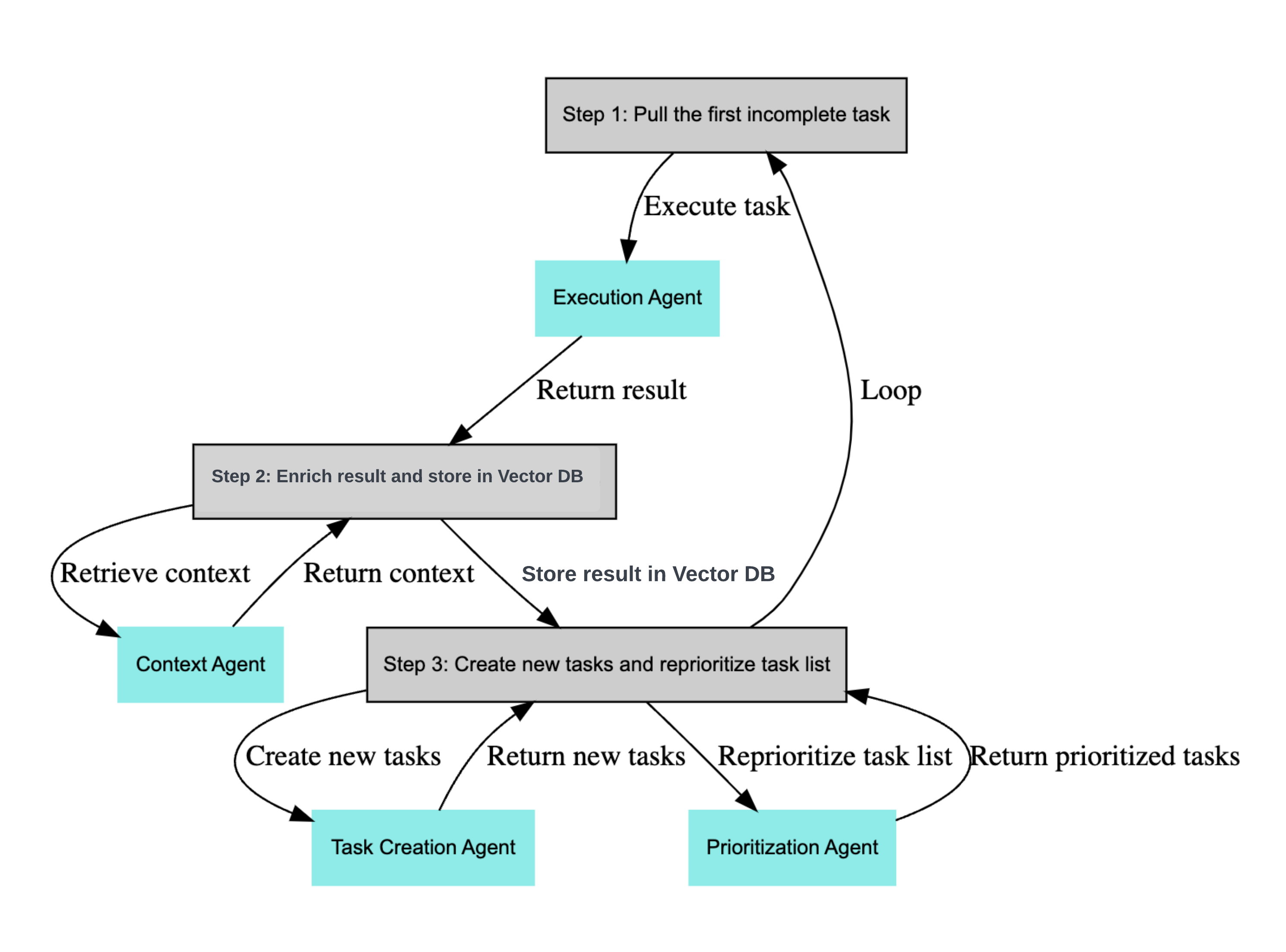
The mechanism runs in four steps — and it's exactly the same logic at the core of every modern agent.
An objective and a first task. You give a goal, for example "write a market brief," and a seed task.
Execution. The model takes the task at the top of the queue and executes it, drawing on the objective and what's already been done.
Task creation. A second call to the model looks at the result and the overall objective, then generates new tasks to add to the queue. This is where the agent decides what comes next.
Prioritization. The queue is reordered so the most relevant task moves to the top. Then the loop restarts, until tasks or the objective are exhausted.
This loop — task queue, execution, generation, prioritization — is the DNA of agentic AI. Understanding it through BabyAGI means understanding what Manus, Devin, or any other agent does under the hood, just far more robustly. Our guide on GPT agents places this mechanic in the broader picture.
Why nobody codes directly on BabyAGI anymore
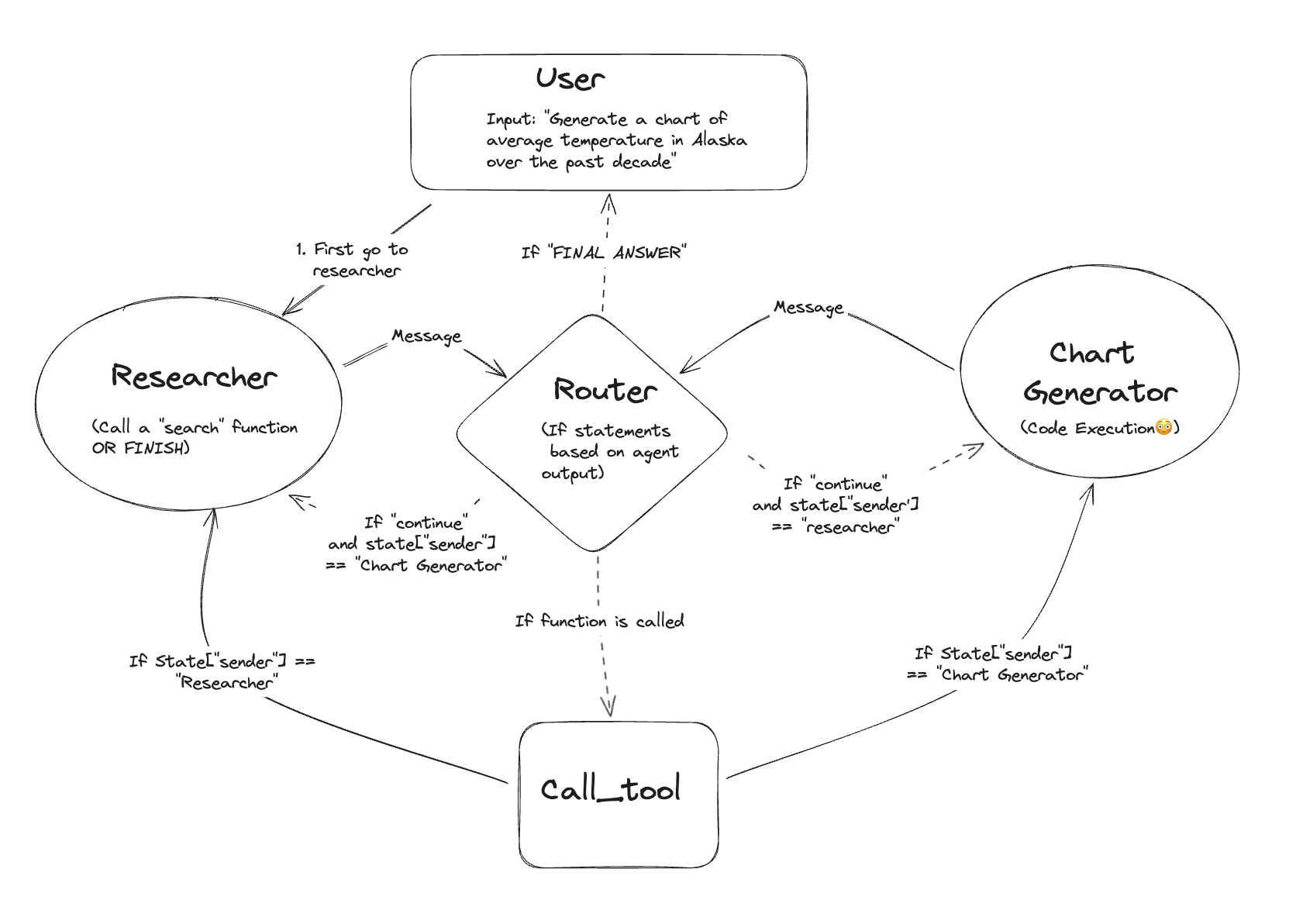
BabyAGI shows the loop. It doesn't show everything you need to add around it for an agent to hold up under real conditions. And that "around it" represents almost all of the work.
State management. A production agent needs to know exactly where it stands, be able to resume after an interruption, and keep a trace of every decision. BabyAGI's bare loop does none of that.
Error handling. What happens when a tool fails, when the model returns malformed output, when a task goes in circles? A serious framework has answers. BabyAGI doesn't.
Tools and guardrails. Cleanly connecting tools, limiting what an agent can do, setting attempt and cost budgets: essential, and absent from the original project.
Observability. In production, you need to be able to replay what an agent did, step by step, to debug it and trust it. That's the whole point of tools like those in our MCP and connectors category.
Building all of this yourself on top of BabyAGI means rewriting a framework. You might as well use one that already exists.
Open source agent frameworks in 2026
Here are the solid options for building an agent today — all open source.
| Framework | Language | Its strength | Best for |
|---|---|---|---|
| LangGraph | Python | Stateful agents, fine-grained flow control | Reliable and complex agents |
| CrewAI | Python | Orchestrating agent teams | Multiple cooperating agents |
| AutoGPT | Python | Platform, historic ecosystem | Prototyping, generalist agents |
| Pydantic AI | Python | Strict typing, validated outputs | Robust and predictable code |
| Mastra | TypeScript | Agents in the JS ecosystem | Web and full-stack developers |
LangGraph. LangGraph models an agent as a state machine: you explicitly describe the steps and transitions. More verbose to write, but you control everything and behavior is predictable. It's the choice when an agent needs to be reliable.
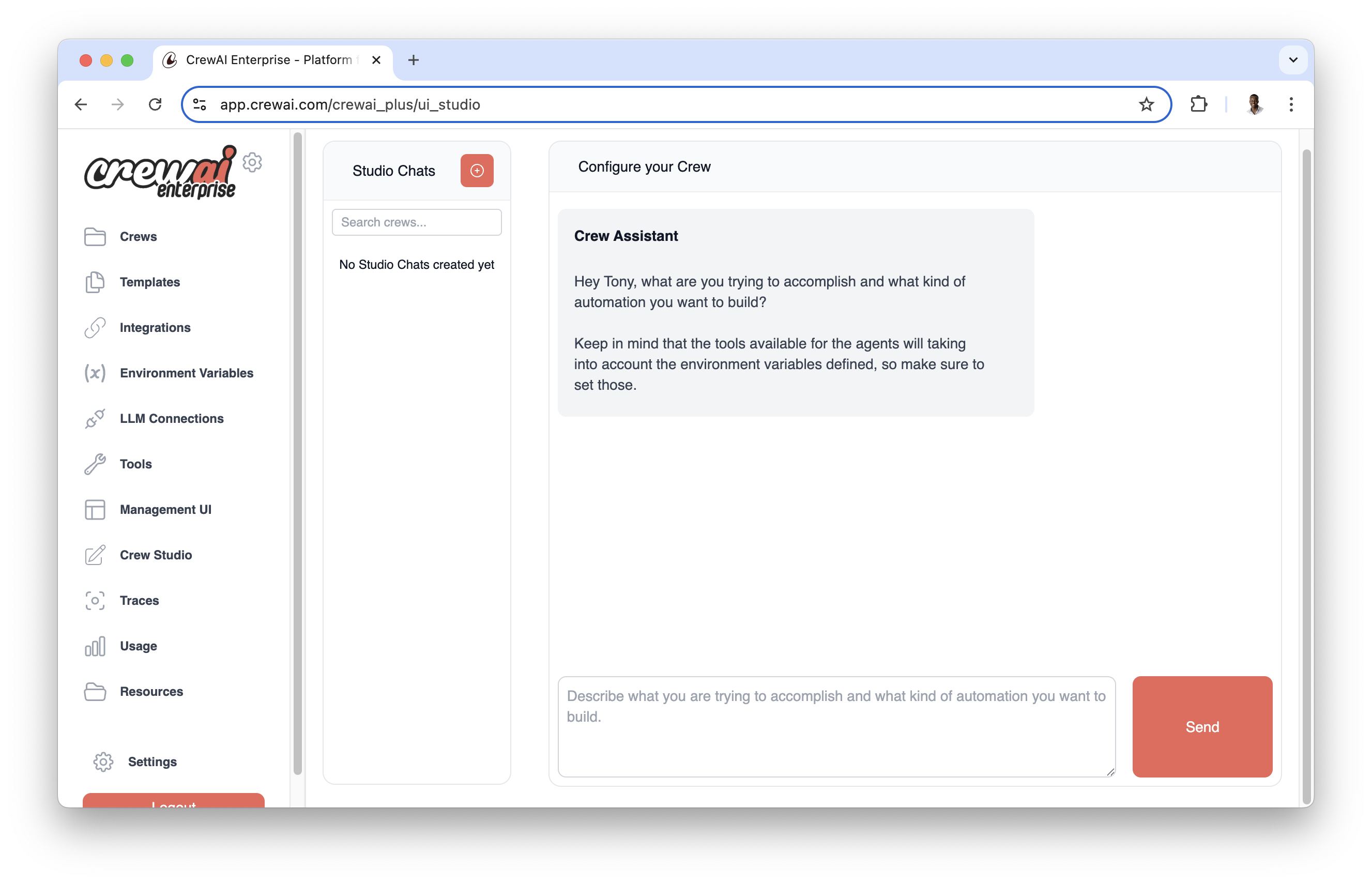
CrewAI. CrewAI is built for making multiple agents collaborate, each with a role. When your task naturally breaks down into specialties — one agent searches, one writes, one reviews — it's a comfortable abstraction.
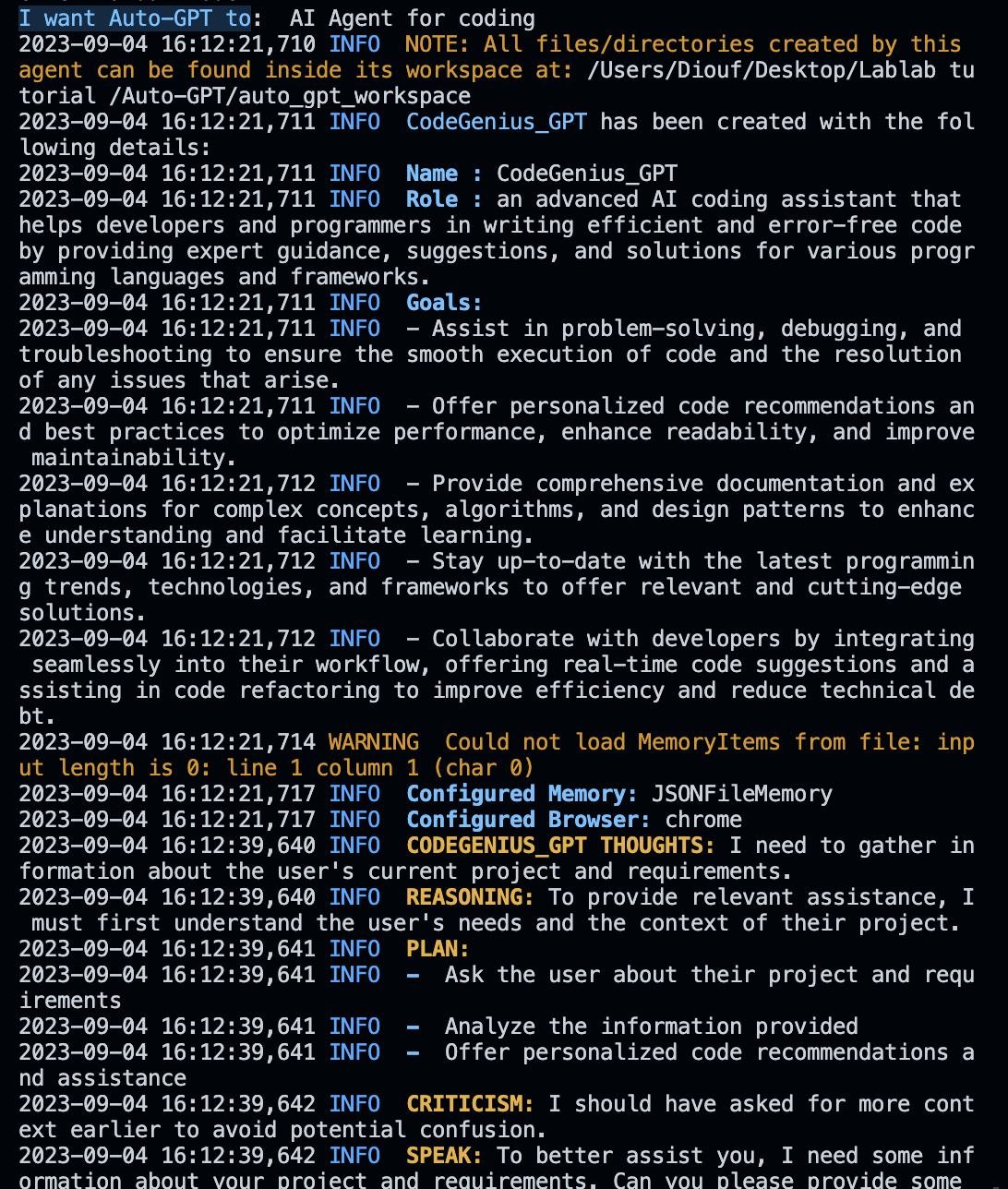
AutoGPT. AutoGPT has come a long way: from the viral script of 2023, it's become a platform. Still relevant for quickly prototyping a generalist agent, with a well-stocked ecosystem.
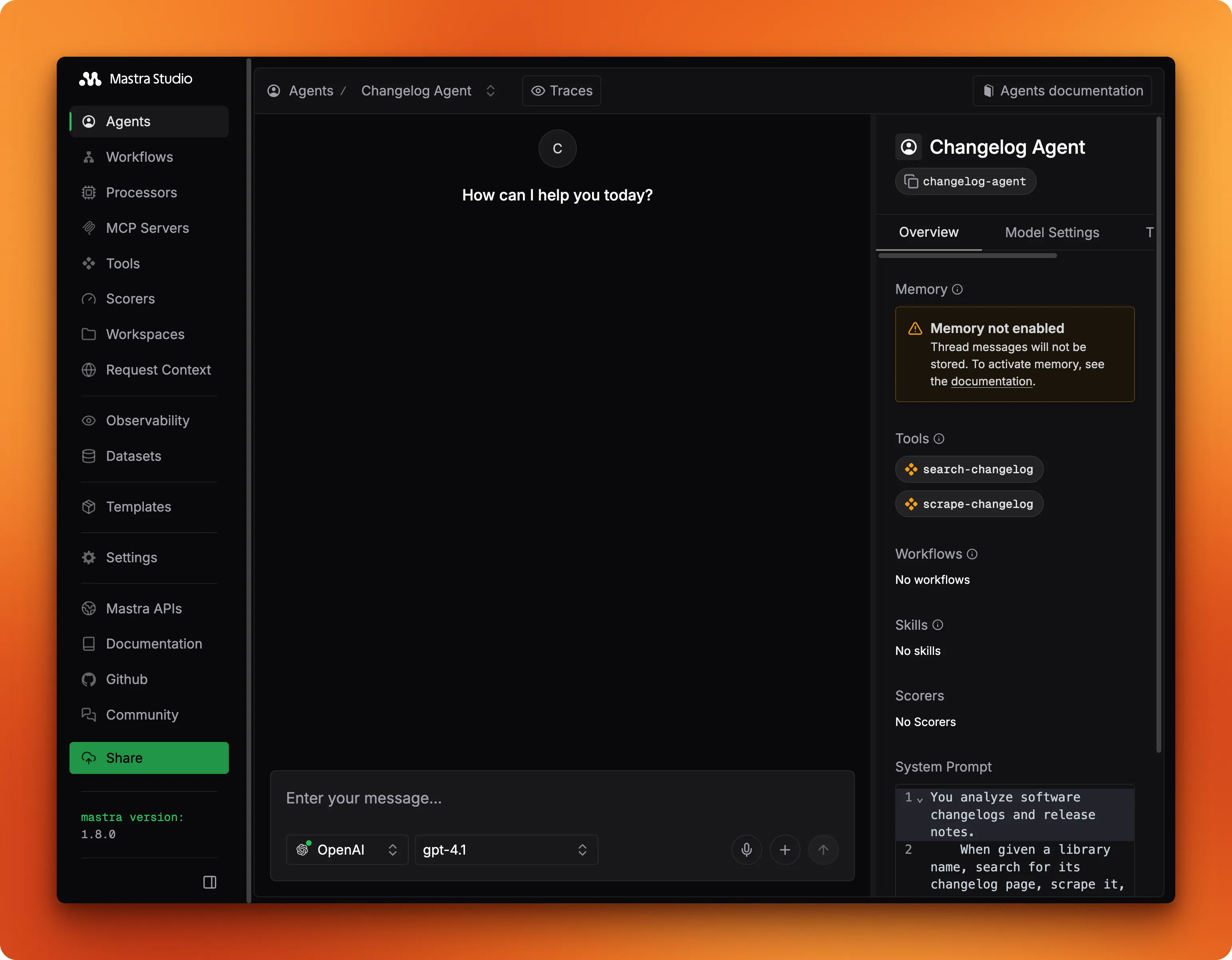
Pydantic AI and Mastra. Pydantic AI brings the rigor of typing to the world of agents: model outputs are validated against a schema, which cuts down on surprises. Mastra does the same kind of work on the TypeScript side, for teams that live in the JavaScript ecosystem.
How to choose, concretely
Ask yourself three questions.
What language? If your team is full-stack JavaScript, Mastra avoids a stack switch. If you're in Python, the rest of the list opens up.
One agent or several? A single well-defined linear task: LangGraph or Pydantic AI. A task that breaks down into distinct roles: CrewAI is built for that.
Reliability or prototyping speed? To get a demo running in an afternoon, AutoGPT. For an agent that will go to production and that you'll need to maintain, LangGraph and Pydantic AI — because control and typing pay off over time.
And one rule that never changes: start with the simplest and most verifiable task, run the agent while watching it, then expand. An agent you deploy wide before seeing it work small is an agent you don't control.
The lasting lesson of BabyAGI
Beyond the code, BabyAGI passed on a sound intuition: an agent isn't magic, it's a loop. Objective, tasks, execution, new tasks. Everything else — memory, tools, guardrails, observability — is engineering added around that loop.
That's both reassuring and demanding. Reassuring, because the concept is accessible to any developer. Demanding, because the difference between a demo that wows and an agent that actually delivers lives entirely in that engineering. BabyAGI shows the loop; the 2026 frameworks provide the rest.
Verdict
BabyAGI is no longer the tool you build with — and that's not a criticism: it was never designed for that. It fulfilled its historical function, making agentic AI understandable, and it remains the best first contact with the subject. Read its code once, and you'll have grasped the essentials.
For production, move to a modern framework. LangGraph if you want control and reliability, CrewAI for agent teams, Pydantic AI for robustness through typing, Mastra on the TypeScript side. The right reflex doesn't change: understand the loop first, automate second, and keep an eye on what the agent is actually doing.
Frequently asked questions
What is BabyAGI?
BabyAGI is a 2023 open source project that demonstrates, in very little code, how a language model can manage its own task list: create tasks, execute them, generate new ones, in a loop, to reach an objective. It's a pedagogical proof of concept, not a finished product.
Is BabyAGI still used in 2026?
Not really for building production agents. It still has strong pedagogical value: it's the fastest way to understand the loop at the heart of every agent. For production, you use mature frameworks like LangGraph, CrewAI, Pydantic AI, or Mastra.
What's the difference between BabyAGI and AutoGPT?
Both appeared in 2023 and illustrate the autonomous agent. AutoGPT aimed for a more complete generalist agent and became a platform. BabyAGI chose radical simplicity — a short, readable script — to make the concept understandable. AutoGPT does more; BabyAGI explains better.
Which AI agent framework should I choose?
LangGraph for a reliable agent where you control every step, CrewAI for making multiple agents cooperate, AutoGPT for fast prototyping, Pydantic AI for robustness through typing, Mastra if your team works in TypeScript. The choice depends on your language and the complexity of the task.
Do you need to know how to code to use an agent framework?
Yes. LangGraph, CrewAI, Pydantic AI, and Mastra are development libraries: you need to program to use them. If you're looking for a ready-to-use agent without code, look at products like Manus or Genspark.
Keep reading
Agent GPT and autonomous AI agents: what they are, what they're worth
Agent GPT, AgentGPT, autonomous AI agents: what these terms really cover, how they work, what they can do in 2026, and where the limits are.
Best MCP Servers in 2026: Joute's picks for connecting Claude, Cursor, and the rest
Top useful MCP servers in 2026: filesystem, GitHub, browser, database. Which ones to install first on Claude Desktop, and which ones to skip.
MCP vs API: why the protocol changes everything for connecting an AI
MCP or REST API for getting an AI to work with your tools? We compare both approaches: dev effort, security, longevity, and when each one is worth it.