
The essentials in 30 seconds
AI news moves too fast to follow through social media feeds. A good newsletter filters the noise and delivers what matters at a sustainable pace. You just need to pick the right one, because plenty of them are nothing but recycled announcements.
- A useful AI newsletter does two things: filter what matters, and explain why it matters. Everything else is reformatted noise.
- On the French-language side, the offering has grown and several serious newsletters now cover AI for a professional audience.
- On the English-language side, the established references remain the most comprehensive, at the cost of sometimes overwhelming volume.
- The right number of subscriptions is two or three, not ten. Beyond that, you're not reading anymore — you're just accumulating guilt.
- Watch out for 100% promotional newsletters: if every issue sells a tool, it's not information.
Bottom line: one generalist French-language newsletter, one in-depth English-language one, and optionally a specialized one for your field. Three max.
What makes a good AI newsletter
Before the list, the criteria — because it saves time. An AI newsletter that deserves your email address checks three boxes.
It filters. Dozens of AI announcements come out every week. A good newsletter keeps five and ignores the rest. If it delivers everything, it spared you nothing.
It explains. Listing an announcement is useless. A useful newsletter says why a release matters, what it concretely changes, and for whom. That layer of analysis is what justifies the subscription.
It's honest about links. A lot of newsletters survive on affiliate deals and sponsorships, which is legitimate when disclosed. Less so when every issue is a disguised sales pitch. A newsletter that never says anything bad about any tool isn't informing you — it's selling to you.
Keep these three criteria in mind as you go through the selection.
The selection, French and English
French-language newsletters
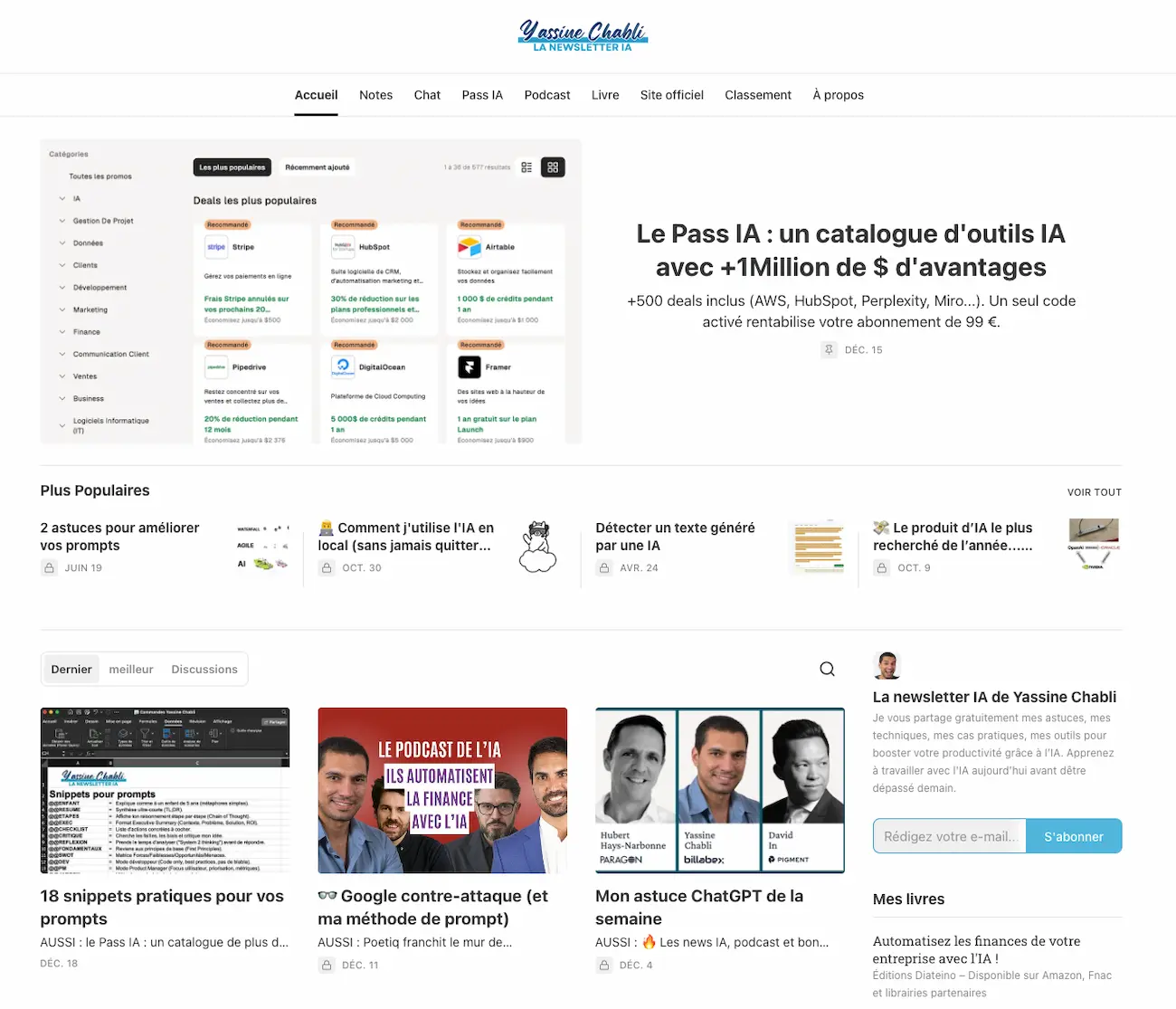
The French-language offering was thin for a long time. That's no longer the case. Several newsletters now cover AI for a professional audience, with real curation and contextualization work, and the advantage of covering AI as it's experienced in France and Europe: regulatory challenges, accessible tools, prices in euros.
For most French speakers, using a French-language newsletter as your foundation is the right call. It gives you the rhythm of current events without the language barrier, and keeps you up to date on local specifics that American newsletters ignore. The best ones combine a weekly news review with occasional in-depth analyses.
The same warning applies here as elsewhere: check that there's actual analysis and not just a list of links, and that the editorial line is willing to take a position. A newsletter that genuinely tests tools, like Joute does, is worth more than a compilation of announcements.
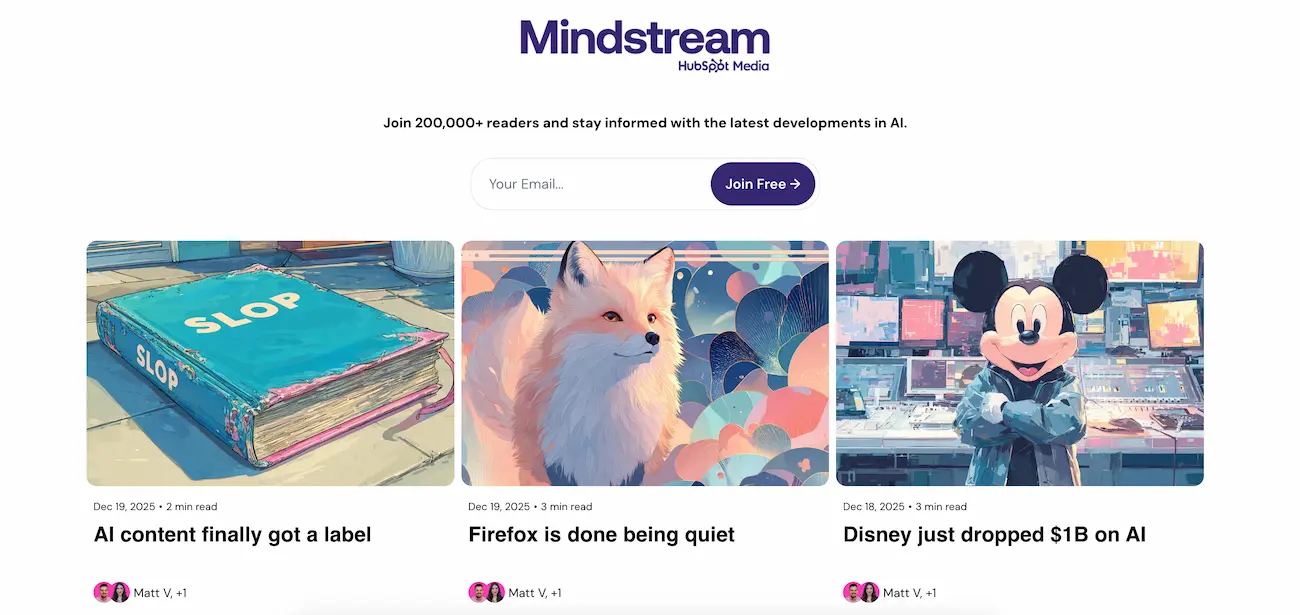
English-language newsletters
English-language references remain the most comprehensive, simply because the AI ecosystem is predominantly English-speaking and these newsletters are closest to the source. You'll find the sharpest analysis, the most exhaustive coverage, and often the earliest.
The downside is volume. Some reference English-language newsletters are nearly daily and lengthy. If you don't have the time, they become a source of stress rather than a service. For a non-specialist French-speaking audience, one solid English-language newsletter, read when you have time, is more than enough.
Specialized newsletters
Beyond the generalists, there are newsletters focused on specific use cases: AI for developers, AI for marketing, AI for image and creative work. If you have a specific field, a specialized newsletter is often worth more than a second generalist one: it speaks directly to your tools. That's also true for keeping up with chat tools like ChatGPT, Claude, or Gemini, which ship a new feature every month.
For developers, a specialized AI and code newsletter pairs well with our guide to the best AI for coding and the AI IDE ranking. For visual creation, a newsletter dedicated to image AI complements the Midjourney guide and the roundup of free Midjourney alternatives. To explore what exists beyond chat tools, check out the AI for writing category and the AI Agents category.
Table: how to build your subscription stack
| Profile | Core newsletter | Complement | Avoid |
|---|---|---|---|
| Curious non-specialist | One generalist French-language | None, or one light English | Dense daily newsletters |
| AI professional | One in-depth French-language | One reference English-language | Accumulating without reading |
| Developer | One specialized AI and code | One light generalist | 100% promo newsletters |
| Creative, image and video | One specialized creative | One light generalist | Recycled announcements |
Subscription mistakes to avoid
Subscribing to everything. One newsletter too many doesn't add up — it cancels out the others: you end up opening nothing. Two or three subscriptions you actually read beat ten you ignore.
Confusing volume with value. A long daily newsletter isn't better than a short weekly one. The value is in the curation, not the quantity.
Ignoring editorial stance. A newsletter that never expresses reservations about any tool isn't neutral — it's promotional. The total absence of criticism is a signal, not a mark of credibility.
Never cleaning house. Your needs change. A newsletter that was relevant six months ago may no longer be. Unsubscribe without guilt: a clean inbox gets read, a cluttered one gets endured.
And Joute's newsletter
Might as well be upfront — this is our site. The Joute newsletter follows the same line as what you're reading here: we test AI tools for real, we give prices in euros, and we're willing to say when a tool isn't worth its price tag. No recycled announcements, no 10-out-of-10 reviews. If this approach resonates with you, signing up is free and there's no aggressive pop-up. If not, the newsletters in the selection do the job just fine.
Verdict
Following AI in 2026 without drowning in it is a hygiene problem, not a motivation problem. The solution isn't reading more — it's choosing well and setting limits. One French-language newsletter as your foundation, one in-depth English-language one if you want depth, one specialized one if your field justifies it. Three, absolute max.
The only real criterion stays constant: the newsletter must filter and explain, not pile up and sell. Apply it without mercy, and your inbox will become a source of information again rather than a chore.
Frequently asked questions
What's the best AI newsletter in French?
Several French-language newsletters now cover AI seriously, with real news curation and the advantage of addressing European issues. The right criterion: it should bring analysis and not just a list of links, and it should be willing to take a nuanced stance on tools.
How many AI newsletters should you follow?
Two or three, no more. One generalist core newsletter, optionally one in-depth one, and a specialized one if your field justifies it. Beyond that, you stop opening anything and accumulate guilt instead of information.
Are AI newsletters free?
Most offer a free tier funded by sponsorships and affiliate deals. Some reserve their deeper analyses for a paid tier. Quality free newsletters exist; the key is checking that they stay honest about their commercial relationships.
French-language or English-language AI newsletter?
French-language as your foundation for most people: no language barrier, and coverage of European specifics. English-language as a complement if you want depth and early access — the AI ecosystem is predominantly English-speaking.
How do you spot a bad AI newsletter?
If every issue sells a tool and never voices a single reservation, it's not information — it's promotion. Overwhelming volume without curation is another signal: a good newsletter keeps the essentials and cuts the rest.
Keep reading
Best MCP Servers in 2026: Joute's picks for connecting Claude, Cursor, and the rest
Top useful MCP servers in 2026: filesystem, GitHub, browser, database. Which ones to install first on Claude Desktop, and which ones to skip.
MCP vs API: why the protocol changes everything for connecting an AI
MCP or REST API for getting an AI to work with your tools? We compare both approaches: dev effort, security, longevity, and when each one is worth it.
MCP: What Is It? Model Context Protocol Simply Explained
MCP, Model Context Protocol: the simple definition, what it's for, how it works, and why this open standard changes how AIs talk to your tools.